

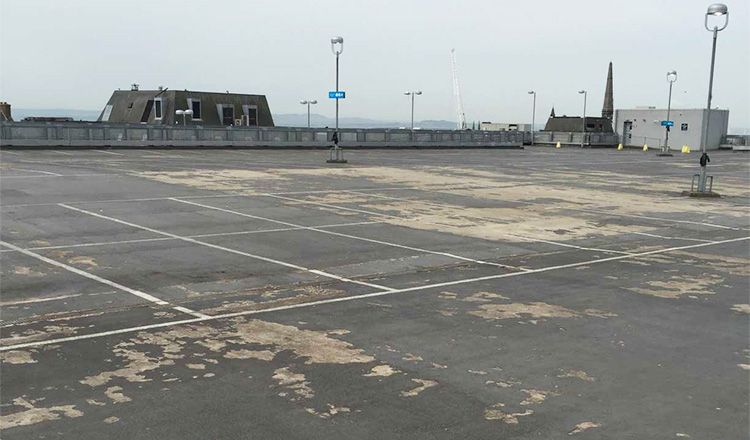
Multi-storey car parks face some of the harshest exposure conditions in the built environment. Constant traffic loading, rainwater, de-icing salts, temperature changes and ageing construction materials all combine to create a challenging environment for reinforced concrete structures. To maintain safety, serviceability and long-term value a proactive approach is essential. This is where a thorough condition survey becomes a key part of responsible asset management.
Condition surveys are not just recommended best practice. They form a core component of the British Parking Association’s life care planning approach, which provides a structured method for inspecting, maintaining and managing car park structures throughout their lifespan.
The role of waterproofing in car park durability
Waterproofing is central to protecting reinforced concrete. Once water enters the structure it can carry chlorides from de-icing and coastal salts deep into the slab, leading to corrosion of the embedded steel reinforcement. This corrosion (rusting) typically expands within the concrete causing cracking, spalling and eventual compromise of the structural capacity.
A condition survey identifies, amongst other issues, weaknesses in existing waterproofing membranes or coatings before these issues become serious. Typical problems uncovered include cracking, ponding, delamination, localised wear and leaks through movement joints and details. When such problems are detected early, they can be repaired before moisture has the chance to reach and damage the steel reinforcement.
How condition surveys align with BPA life care planning
The BPA life care planning framework emphasises the need for systematic maintenance and periodic assessment of car parks. It sets out essential components that every life care plan should contain, which include routine inspections, comprehensive condition surveys and material testing.
Condition surveys specifically address the requirement to understand the current condition of the structure, the performance of the waterproofing system and any early signs of deterioration. As the BPA notes, this process applies to both new and existing car parks and should be updated as the structure ages. Structures older than eight years should have the full suite of life care components in place, including condition surveys, to ensure that degradation is detected and addressed promptly.
The Institution of Civil Engineers guidance also reinforces this approach by recommending that owners and operators maintain a life care plan, supported by evidence from condition surveys, inspections and materials testing, to ensure structural safety and ongoing serviceability.
Identifying and preventing key risks
A detailed condition survey assists in mitigating major risks that commonly affect car park structures.
Corrosion of steel reinforcement
Chloride induced steel reinforcement corrosion is one of the most common causes of premature deterioration. Whilst visual surveys cannot confirm the level of chloride contamination or the condition of the reinforcement itself, they can reveal early warning signs that indicate possible corrosion activity. Typical visual indicators include water and/or rust staining on the surface, which may suggest moisture movement through cracks or defects. Spalling or loose concrete may also be present, as corroded steel expands and forces the surrounding concrete to break away. Other signs include localised cracking, hollow sounding areas when tapped and patches of dampness often with ‘stalactites’ on the soffit below the deck. These observations highlight areas where further investigation and testing are essential to assess the extent of deterioration and to inform the appropriate repair strategy.
Water ingress and freeze / thaw damage
Cracks and membrane failures allow water to penetrate the concrete. In winter this trapped water freezes and expands, which leads to progressive microcracking and surface scaling. A condition survey helps identify areas where the waterproofing layer has failed and highlights where repairs or replacement are necessary to prevent freeze / thaw deterioration.
Serviceability and safety concerns
A neglected waterproofing system can compromise slip resistance, deck integrity and even the performance of drainage systems. Inspections help ensure that surfacing does not become hazardous to users and that water is being directed away from the structure to drainage points effectively.
Supporting long term planning and budgeting
A condition survey provides car park owners with clear evidence of current and future maintenance needs, which aligns with the BPA’s guidance on structured, long-term asset planning. Life care plans include recommendations for short, medium and long-term maintenance strategies, along with budget costings to prevent unexpected failures or emergency works.
By incorporating survey results into long-term planning, owners can prioritise works based on risk condition and expected deterioration rates. This ensures that maintenance investment is targeted effectively, preventing the far higher costs of major structural repairs or temporary closures.
Enhancing reliability and user safety
A well-maintained waterproofing system contributes directly to user safety. Surveys help identify areas of wear, chemical attack or mechanical damage that could compromise the surface or structural performance. Regular inspection and repair work also reduce the risk of sudden failures, which can lead to closures, loss of revenue and reputational damage.
A proactive approach that protects your investment
Condition surveys are a cornerstone of responsible car park ownership. They support compliance with BPA life care planning and ICE recommendations, and provide a clear, structured method for extending the service life of multi-storey car parks.
By identifying issues early, preventing water ingress and supporting data-driven maintenance strategies, condition surveys reduce long-term costs, enhance safety and preserve the value of your asset.