

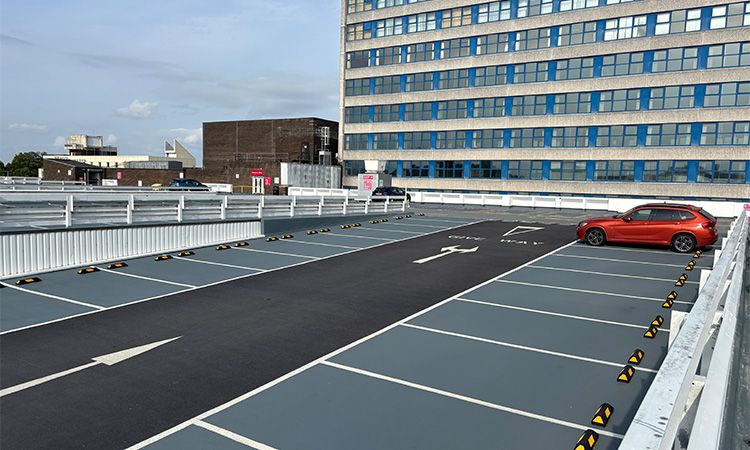
External, top decks of multi-storey car parks are subjected to some of the most punishing conditions of the built environment. From extreme thermal cycling and dynamic vehicular loads, to continuous exposure to standing water, UV radiation and aggressive chemical agents like de-icing salts, the structural integrity of the deck is under constant threat. Traditional asphalt and polymeric coatings often fail prematurely under these stresses, leading to cracking, water ingress, chloride contamination and reinforcement corrosion.
At Triflex, the solution to this 21st-century engineering dilemma lies in advanced polymer chemistry -specifically, high-performance Polymethyl methacrylate (PMMA) cold, liquid-applied waterproofing systems.
Polymethyl methacrylate is an amorphous, synthetic polymer. When engineered into a multi-component cold, liquid-applied waterproofing system, it activates via a highly controlled, exothermic cross-linking process. Upon the introduction of a specialised catalyst, the liquid resin undergoes rapid polymerisation, creating a dense, heavily cross-linked thermosetting polymer matrix.
Scientifically, the resulting chemical structure offers profound advantages for protecting exposed car park decks:
Absolute Hydrolysis Resistance: Unlike certain polymers such as polyurethane, which can degrade when exposed to standing water through a chemical breakdown of their polymer chains (hydrolysis), Triflex PMMA resins are inherently hydrolysis-resistant. They maintain their structural integrity and chemical bonds, even in ponding water.
Ultra-Rapid Curing: The exothermic curing reaction of PMMA is uniquely tolerant of low ambient temperatures. Triflex PMMA systems can cure in temperatures down to 0°C (and -5°C for detail work), achieving a rainproof state in under an hour. This rapid state-change minimises the risk of moisture entrapment or environmental contamination during the application window.
Combatting Dynamic Structural Movement: A multi-storey car park is not a static monolith; it is a highly dynamic structure, constantly experiencing deflections, torsional stress from vehicular movement, and aggressive thermal expansion and contraction. External decks, bearing the brunt of UV radiation and winter freezes, are highly susceptible to both static and dynamic cracking. To mitigate this, the waterproofing membrane must exhibit advanced elastomeric properties across a wide temperature spectrum.
Triflex achieves this by pairing uniquely formulated, flexible PMMA resins with high-tensile strength fleece reinforcement. This composite matrix absorbs, disperses, and accommodates kinetic energy and stress loads. Consequently, fully reinforced systems like Triflex ProPark® achieve the highest class of dynamic crack bridging under European Standard EN 1504-2, specifically Class B4.2 (-20°C). This guarantees that the polymer network retains its elastomeric, crack bridging capabilities even at sub-zero temperatures, where conventional bituminous materials and other coatings become brittle and fracture.
Impermeability to Chloride Ion Diffusion and Carbonation: The primary modes of degradation in reinforced concrete are chloride-induced corrosion (facilitated by road salts) and carbonation (where diffused CO2 lowers the concrete's pH, damaging the passivating alkaline layer around the steel rebar).
Triflex PMMA systems form a completely seamless, impermeable barrier at the molecular level. The dense micro-structure of the cured PMMA prevents the diffusion of chloride ions, moisture, and carbon dioxide into the concrete capillaries. Furthermore, the highly cross-linked polymer matrix exhibits exceptional chemical resistance to petrochemicals (petrol, diesel, engine oil, brake fluid) and battery acids, ensuring the protective wearing layer does not degrade or soften upon chemical exposure.
Triflex ProPark®: The Apex of External Deck Protection
For exposed, external ‘roof top’ car park decks and ramps above occupied premises, or in high-risk parking structures, Triflex ProPark represents the pinnacle of PMMA engineering.
Fully Reinforced Membrane: Triflex ProPark integrates a heavy-duty, fully reinforced waterproofing membrane that accommodates profound dynamic movement while remaining entirely totally cold-applied (eliminating the severe fire risks associated with hot works).
Superior Adhesion and Asphalt Overlay: The exceptional bond strength of Triflex PMMA allows it to adhere tenaciously to both concrete and asphalt substrates. By overlaying in-situ asphalt, the original concrete cover protecting the structural steel reinforcement is never compromised and the risk of concrete outgassing, which can cause micro-blisters and pinholes in new coatings, is entirely negated.
High-Friction Anti-Skid Wearing Course: The system incorporates tough, aggregate-filled wearing layers (utilising emery or quartz) embedded directly into the PMMA matrix. This delivers a highly durable Pendulum Test Value (PTV) rating for long-term slip and skid resistance under heavy vehicular shear, braking forces and pedestrian traffic.
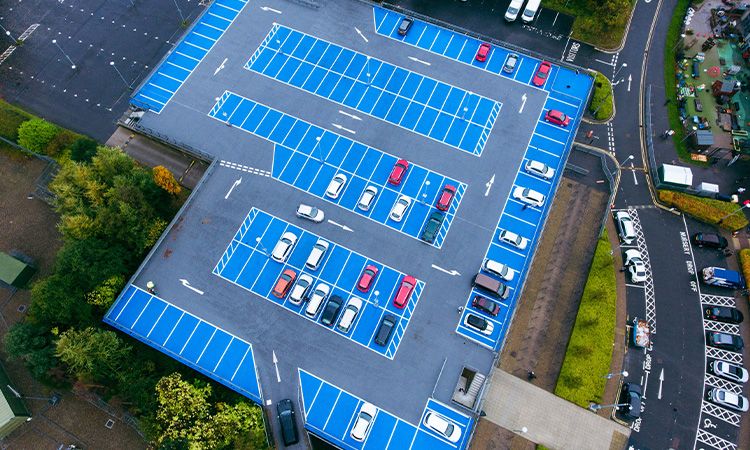
Safeguarding the external decks of multi-storey car parks requires moving beyond traditional surface coatings and embracing engineered polymer science. Triflex’s PMMA technology provides a structurally resilient, dynamic, and chemically impenetrable barrier that actively extends the lifecycle of parking structures.
By utilising advanced systems like Triflex ProPark, structural engineers and facility managers can ensure long-term structural protection, rapid return to service, and unyielding performance in the face of modern environmental extremes.