
Introduction
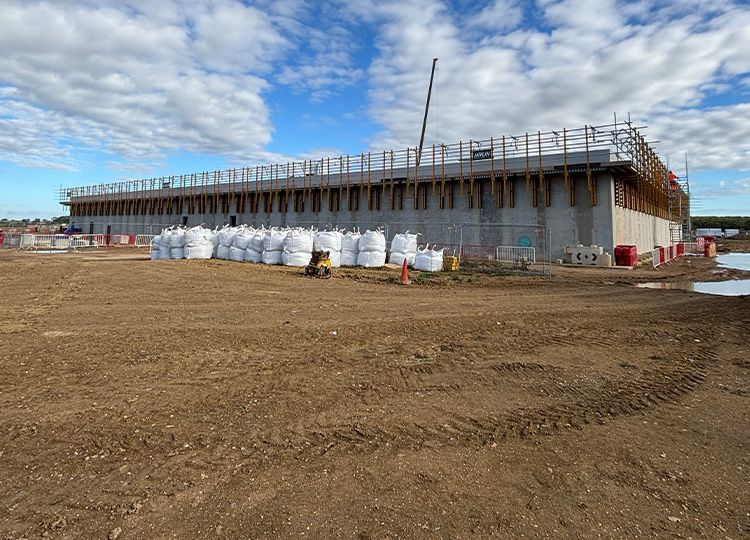
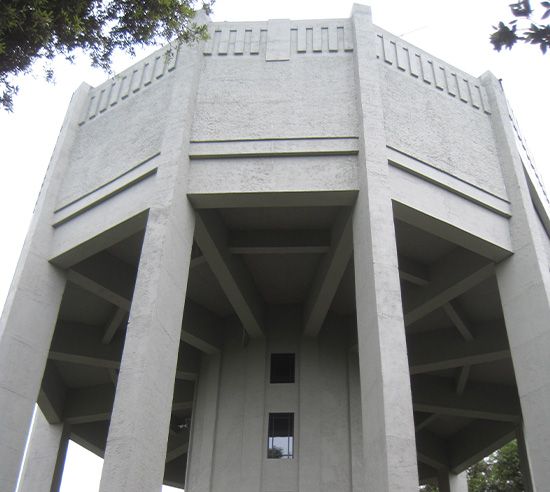
As part of a water authority’s long-term water resources management plan, a new water storage reservoir was constructed to increase the region’s strategic potable water storage capacity. This investment in water infrastructure, which includes pipelines, pumping stations and storage reservoirs, is designed to strengthen the security and resilience of the regional water supply. With a capacity of approximately 20 million litres, the reservoir supports the continued growth of the local economy and contributes to regional prosperity.
The challenge
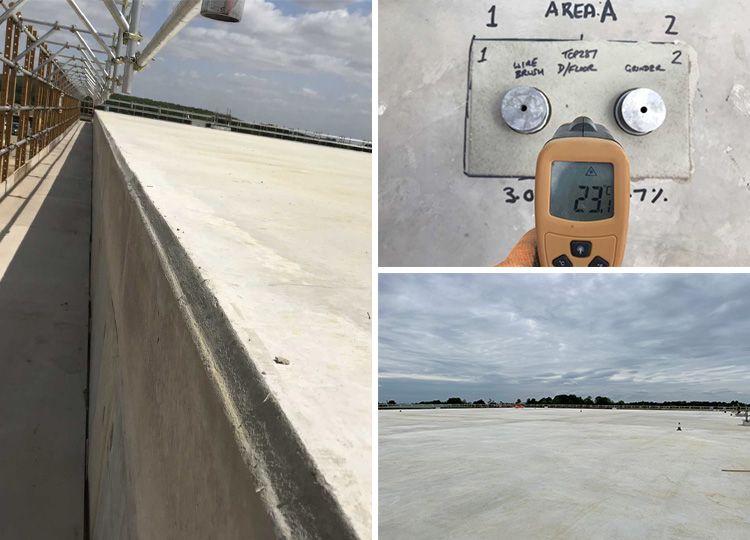
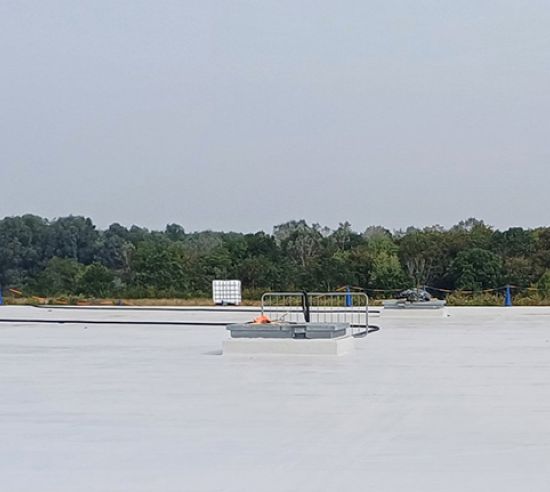
The 4,500m2 in situ-cast concrete roof required a high performance waterproofing and protection solution to safeguard the newly built critical infrastructure. Because of the large surface area, the client sought to maintain a more stable thermal range across the roof than is typically achieved in older reservoirs. Maintaining consistent temperatures at structural deck level was essential to minimise thermal movement and reduce the risk of cracking.
The concrete mix used in the roof included a specialist additive. Although Triflex waterproofing systems are compatible with a wide range of substrates, the Triflex technical team carried out on-site adhesive and cohesive strength tests. These tests confirm the compatibility of the primer and whether any additional substrate preparation would be required prior to overlay.
The solution
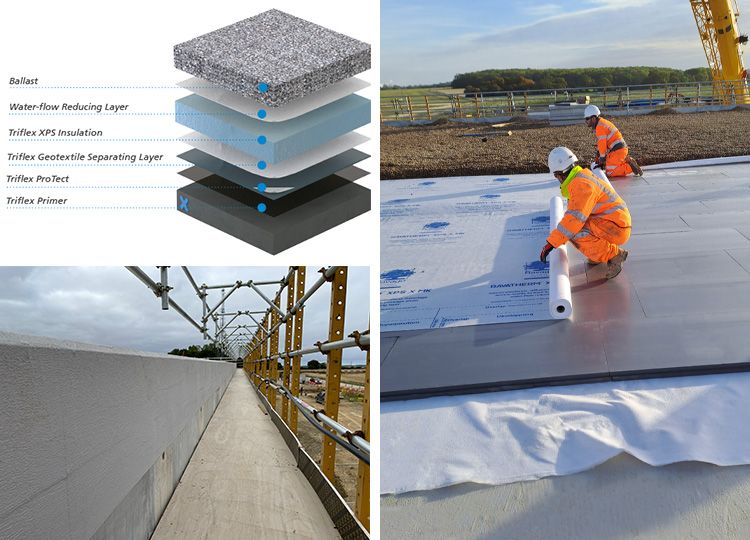
Working closely with Triflex authorised contractor, CRL, Triflex proposed an insulated inverted roof build-up to reduce thermal loading and protect the concrete structure. This approach was designed to mitigate the risk of thermal movement from fluctuating temperatures at structural deck level, which can cause cracking and compromise the integrity of water-retaining structures.
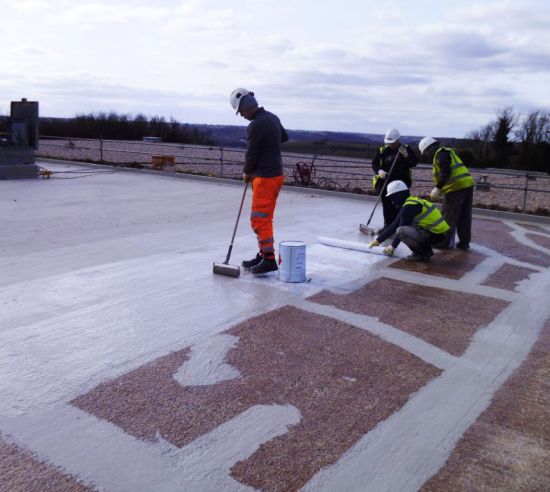
The system featured the BBA certified Triflex ProTect cold liquid-applied waterproofing membrane, with an expected service life in excess of 25 years. A geotextile separation and filtration layer was installed above the waterproofing membrane, followed by 50mm of extruded polystyrene (XPS) insulation to improve thermal performance. A water-flow reducing layer was then added, with a ballast layer placed on top to secure the insulation and provide additional protection.
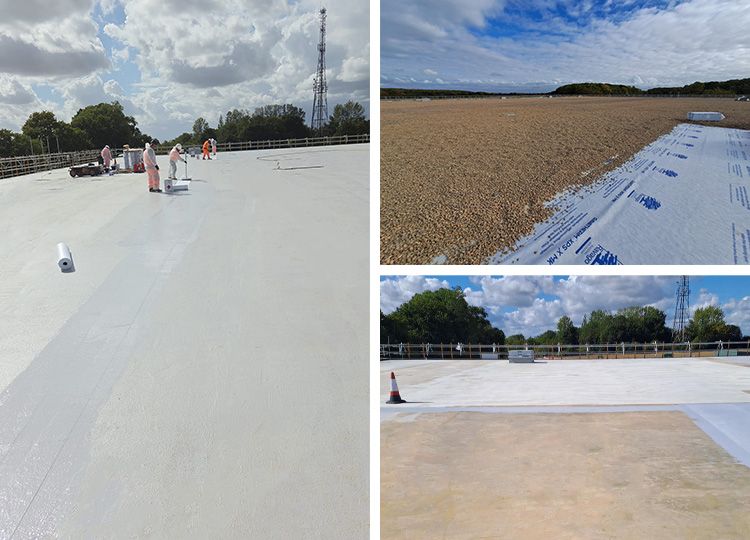
Before the geotextile membrane and the remainder of the build-up was installed, an electronic leak detection test was carried out on the fully reinforced Triflex ProTect. This non-invasive testing method provided assurance that the waterproofing layer was fully intact and free from defects. By identifying any potential breaches at this early stage, the works were able to proceed with confidence, knowing the integrity of the waterproofing system had been verified prior to the installation of insulation and ballast.
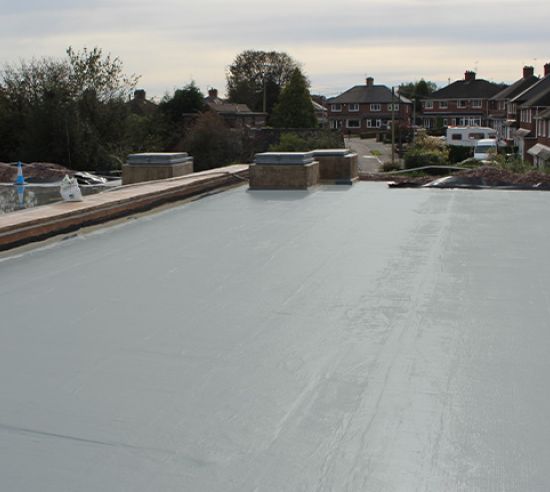
To ensure the ballast was restrained at the perimeter of the roof, a handrail and metal toe board construction was installed. This was done prior to installation of the separation layer, XPS insulation, water-flow reducing layer and ballast overburden, offering both structural containment and edge protection. The Triflex ProTect system was also installed on the vertical downstands of the reservoir roof, ensuring seamless waterproofing continuity between horizontal and vertical surfaces.
Performance and sustainability benefits
Fully reinforced, the Triflex ProTect system offers outstanding waterproofing protection with exceptional crack bridging capability. Both Triflex ProTect and Triflex ProDetail (used for detailing such as the perimeter downstand and access hatches) are certified to BS EN 1504-2 B4.2 (-20°C) dynamic crack bridging, under BS EN 1062-7 Method B, the highest classification. This allows the waterproofing membrane to accommodate movement in the substrate without compromising the waterproofing protection. This is particularly important for large concrete structures exposed to varying environmental conditions.
The improved thermal performance of the inverted roof build-up helps to stabilise the temperature of the concrete slab, reducing the risk of thermal-induced cracking and extending the lifespan of the structure. The system is also highly resistant to hydrolysis, making it ideal for long-term exposure to moisture and ensuring durability in demanding environments.
In line with the client’s sustainability goals, materials were delivered in Intermediate Bulk Containers (IBCs), significantly reducing packaging waste and supporting more efficient site logistics.
Proven confidence
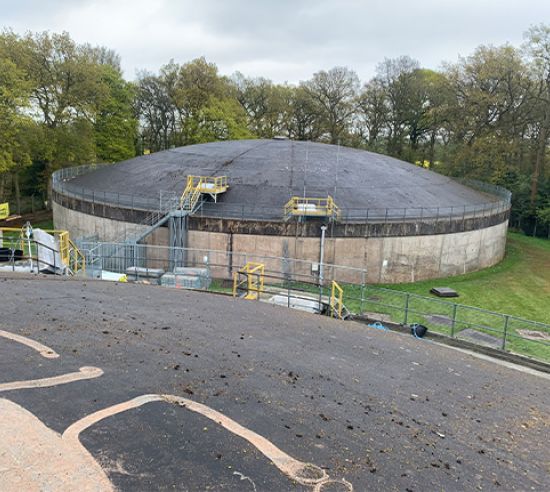
The same Triflex solution had already been successfully installed on a nearby clean water service reservoir by CRL. Their proven track record and familiarity with the system gave the client added confidence in the approach. For the new reservoir project, CRL once again delivered the installation to an exceptional standard, ensuring full compliance with the specification and maintaining a high level of workmanship throughout. Their expertise, combined with Triflex’s technical support and on-site testing, resulted in a high-quality, long-lasting solution that will protect this vital infrastructure for years to come.