
Introduction
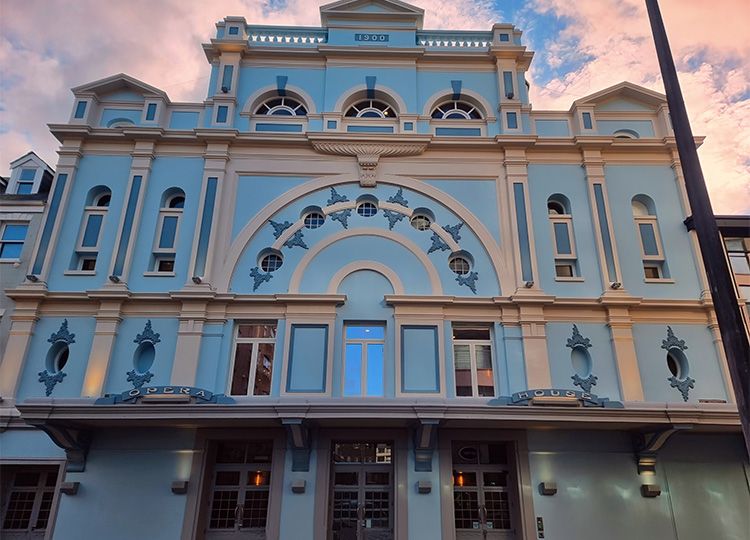
The Jersey Opera House was in need of a critical roof refurbishment to protect its Grade 2 listed structure from water ingress. Spanning 775m² across eight complex roof zones, the works included installation of a new warm roof system and waterproofing of the canopy within the heritage façade. Rapid-curing Triflex PMMA systems enabled daily watertight completion, essential for safeguarding the ornate interior and high-level dome. The new Triflex liquid roofing system also supports the building’s decarbonisation strategy and future maintenance needs.
The challenge
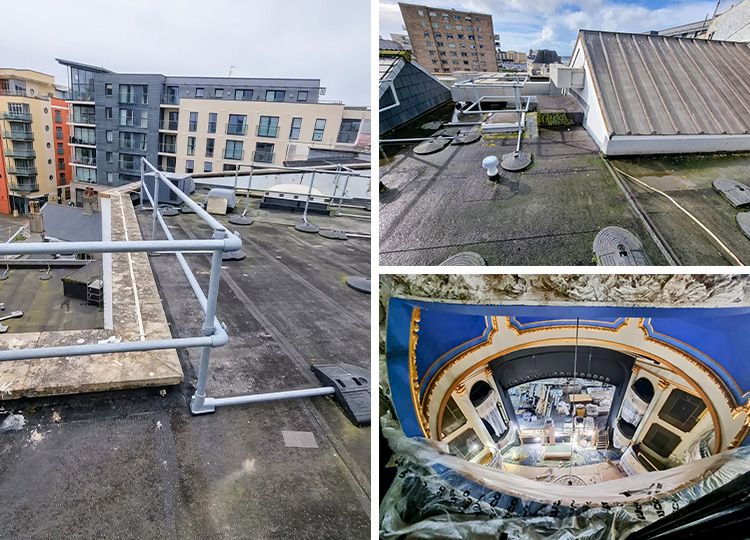
Crucial water ingress prevention
Due to the Jersey Opera House’s Grade 2 listed status and the historical value of its interior, it was crucial to prevent any water ingress during the roofing works. In particular, the ornate dome high above the auditorium was of significance. The dome’s height and delicate plasterwork meant that even minor leaks could cause irreversible damage. Rectifying such issues would also require extensive and costly internal scaffolding, potentially disrupting the entire restoration programme.
Installing a canopy was impossible due to the site’s constraints. The building was surrounded by other structures, and the roofscape comprised eight separate roof zones at varying heights, leaving no practical way to anchor or support a temporary cover.
Meticulous daily phasing and precise weather monitoring
As a result, the team implemented a meticulous daily phasing strategy, carefully calculating what could be achieved in a working day to remove and install a new warm roof system to that area of the roof. This meant that accurate weather prediction was key. Rateavon utilised Jersey airport‘s radar predictions for the most accurate wind speed and time of cloud movements for precise weather windows.
The building’s roof layout and access restrictions added further complexity. With limited space for material storage and movement, Ratevaon developed a tandem working strategy, staging materials centrally and working outward to balance weight and maintain progress. Materials were handballed across levels and, where necessary, craned into position.
The solution
Rapid curing supports watertight in a day working
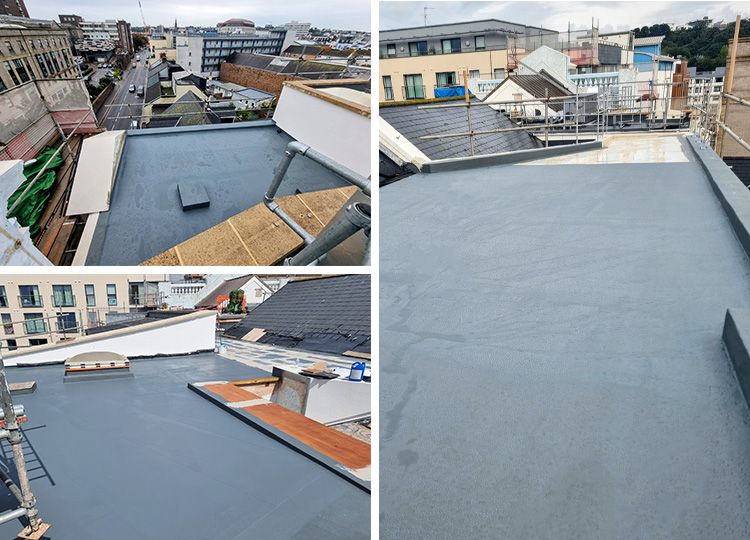
To ensure long-term protection across all roof areas, the Triflex ProTect warm roof system was selected for its exceptional durability, flexibility, and ability to deliver a seamless finish, even on complex roof geometries. The PMMA-based resins cure rapidly, enabling swift and robust waterproofing. This fast-curing capability was essential to maintaining the project schedule and supported the ‘watertight within the working day’ approach.
For the refurbished canopy, the UV stable, PMMA resin-based system provided protection against water ingress while maintaining the visual integrity of the historic structure. Each roof zone presented unique challenges, as the existing build-ups were a mix of warm and cold roof constructions. The installation of a new warm roof required careful planning and sequencing of waterproofing reinstatement, ensuring no exposure to weather-sensitive areas. Leak detection was carried out after each phase to confirm integrity and protect the reputation of the trades following on.
Complex plant and detailing easily waterproofed
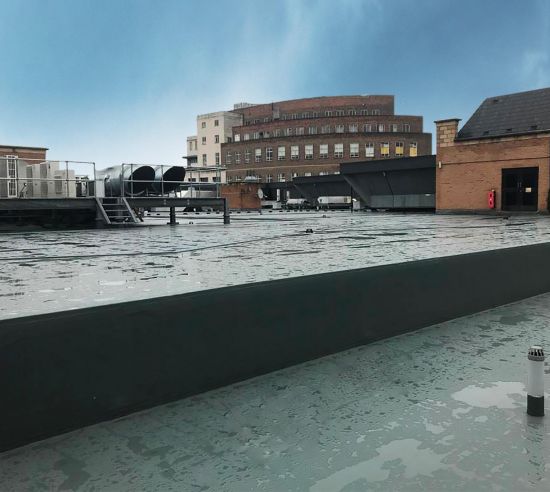
As part of the decarbonisation strategy, the building was converted to all electric. Replacing all the Mechanical and Electrical components had major impact on the plant and services across the flat roofs. With such a large amount of changes to plant, some areas needed to be temporarily sealed during the works, which was achieved to a high standard, negating further risk of water ingress.
Safety improvement with Triflex demarcation systems
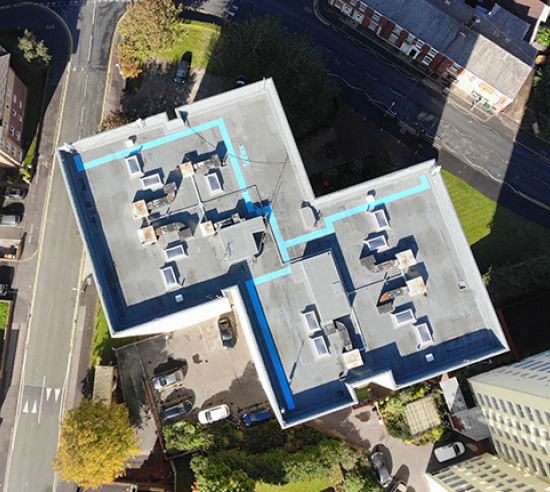
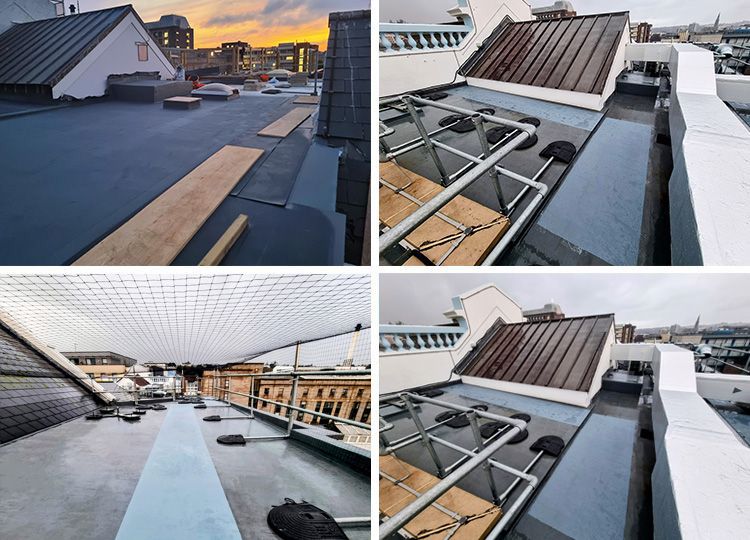
To improve safety of personnel for future maintenance to the extensive plant, demarcation of walkways was implemented. Triflex Cryl Finish 205 was used in different shade that incorporated anti-skid granules. Originally planned by the architects, the walkways had to be reconfigured due to changes in service routes during construction.
Triflex authorised contractor Rateavon demonstrated agility and precision by waiting until the final reinstatement of services before applying the Finish system, ensuring alignment with the correct access paths. Pigeon netting was also installed to reduce the potential for guano and associated risks.
Careful consideration to heritage and historic importance
The refurbishment of the Jersey Opera House roofscape delivers a striking balance between heritage, authenticity and modern functionality. Every visual element was carefully considered to preserve the building’s historic character while enhancing its overall appearance.
The parapet detailing exemplifies this approach. Using Triflex ProDetail, this replicated traditional lead finishes with accuracy. This choice ensured the restored parapets blended seamlessly with the original Georgian aesthetic, maintaining the Opera House’s architectural integrity.